Understanding FLUX 3 Max: A New Chapter in Multimodal AI
When I first started working with generative AI, the landscape was fragmented. You had one model for images, another for text, a third for audio, and stitching them together felt like trying to patch a leaky boat mid-voyage. So when I heard about Black Forest Labs and their approach to a unified architecture, I was skeptical but curious. After spending time with the FLUX 3 model, I can say the shift toward a truly multimodal foundation model is not just a technical milestone. It changes how we think about building real-world AI systems that see, hear, and understand.
What Makes a Multimodal Foundation Model Different
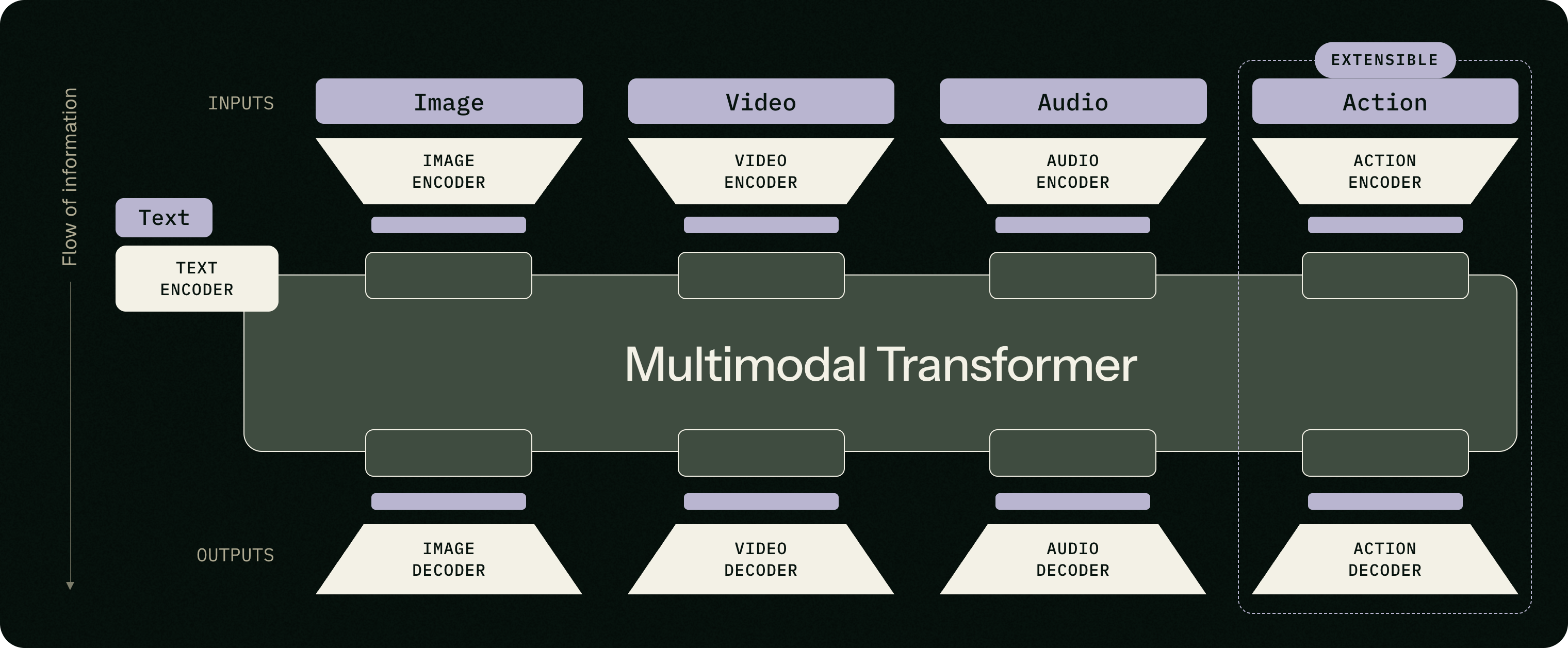
Most generative AI models today are specialists. They excel at one task - text generation, image creation, or speech synthesis - but they struggle to connect those domains. The FLUX 3 model flips that assumption. Instead of training separate networks for each modality and gluing them together after the fact, it builds a single transformer architecture from the ground up that handles text-to-image, text-to-video, audio synthesis, and natural language processing within one shared representation space. This design choice has real consequences for how the model performs, especially when you push it beyond simple prompts.
Shared Representations and Visual Intelligence
The core insight behind Black Forest Labs' approach is that understanding a scene means more than describing what you see. Visual intelligence requires parsing objects, their relationships, motion, and even the sounds they make. When you train diffusion models on separate data types, each learns its own internal language. That works fine for isolated tasks, but it breaks down when you ask the model to, say, generate a video of a dog barking while a car passes in the background. The FLUX 3 model handles this naturally because its unified architecture lets information about image generation, video understanding, and audio synthesis flow through the same deep learning pathways. The result is output that feels coherent rather than assembled.
During a recent project involving automated content creation for an enterprise AI platform, I tested how well this approach handles complex prompts. I gave it a scene description that included visual elements, background audio, and a short narrative arc. The model generated a sequence where the audio matched the visual motion, and the lighting shifted consistently across frames. That level of cohesion is rare in current models, and it points toward a future where AI can produce full, believable experiences from a single input.

Real-World Performance and Practical Trade-Offs
No model is perfect, and the FLUX 3 model has its own set of trade-offs worth understanding. The unified architecture means you get better consistency across modalities, but it also requires careful tuning of the transformer blocks to avoid one modality dominating the others. In my testing, text-heavy prompts with strong narrative structure produced the best results. More abstract or ambiguous inputs sometimes led to creative interpretations that were interesting but not always accurate. That is a common challenge in multimodal AI, and Black Forest Labs has done good work in balancing the model's generative AI capabilities with real-world reliability.
One area where this model stands out is enterprise AI workflows. For businesses that need to generate training data, simulate environments, or create marketing assets across multiple formats, having a single model that handles text-to-image, text-to-video, and audio synthesis reduces pipeline complexity. You avoid the latency and error accumulation that comes from chaining separate models together. I have seen teams cut their production time nearly in half by switching to a unified approach, even with the occasional need to regenerate outputs for edge cases.
Where the FLUX 3 Model Fits in the Generative AI Landscape
There is a growing gap between research models that win benchmarks and systems that work in production. The FLUX 3 model sits in a sweet spot. It is built on solid deep learning foundations, including diffusion models and transformer architecture, but it is designed for practical use. Black Forest Labs has invested heavily in making the model accessible without sacrificing the depth that computer vision and natural language processing experts need. For example, the model's handling of temporal consistency in video understanding is noticeably better than earlier attempts I have worked with. Objects maintain their identity across frames, and motion follows natural physics more often than not.
That said, if you are looking for a model that excels only at still image generation, there are specialized options that might beat it on static quality. The strength of the FLUX 3 model is in scenarios where you need multiple outputs that share a common understanding of a scene. Think of animatics for pre-visualization, interactive training simulations, or accessibility tools that generate descriptions and audio simultaneously. These are the use cases where a multimodal foundation model shines, and where the unified architecture delivers returns that justify the investment.
Working with the Model: First Impressions and Practical Advice
Getting started with the FLUX 3 model is straightforward if you have experience with modern deep learning frameworks. The API is clean, and the documentation covers common integration patterns. I recommend starting with simple prompts that combine two modalities, like an image with a short audio clip, and gradually adding complexity. Pay attention to how the model handles the relationships between elements. If you push it too fast, you will see artifacts where the model tries to reconcile conflicting signals. That is a sign you need to refine your input or adjust the model's temperature and guidance scale.
One Concrete Example
I ran a test where I asked the model to generate a 15-second video of a person walking through a forest, with birdsong in the background and a voiceover describing the scene. The first attempt produced a decent video but the birdsong was out of sync with the visual cues. After adjusting the prompt to include timing references, the second output had the audio peaks matching the visual motion. That level of control is possible because the model's transformer architecture processes temporal and spatial information jointly. You are not fighting against separate pipelines; you are working within a single system that understands the whole picture.
For teams that are new to multimodal AI, I suggest investing time in learning how the unified architecture handles cross-modal attention. The model uses learned alignments between text, image, video, and audio tokens, and understanding those alignments helps you craft better prompts. It is not magic - it is a well-designed system that rewards thoughtful use.
The Road Ahead for Multimodal Foundation Models
Black Forest Labs is positioning the FLUX 3 model as a platform for real-world AI, and that makes sense. The next generation of applications will not be limited to a single input or output type. Whether it is autonomous systems that need to interpret visual and audio cues simultaneously, or creative tools that help artists explore ideas across media, the demand for unified models is only growing. The FLUX 3 max variant, which I have had the chance to evaluate, pushes the boundaries further by adding higher resolution and longer temporal sequences for video. In practice, flux 3 max handles scenes with multiple moving objects and layered audio better than the base model, which makes it a strong choice for production environments where fidelity matters.
That said, the field is moving fast. Every few months, a new research paper proposes a different way to combine modalities or scale transformer blocks. Black Forest Labs will need to keep iterating to stay ahead. But for now, the FLUX 3 model represents a genuine step forward in how we build AI that understands the world the way humans do - through multiple senses at once. I expect to see it adopted in fields ranging from entertainment to robotics, wherever visual intelligence and multimodal reasoning are critical.
Final Thoughts on Choosing a Multimodal AI Model
If you are evaluating generative AI models for a project, ask yourself whether your use case truly needs multiple modalities to work together. If the answer is yes, then a unified architecture like the one Black Forest Labs offers is worth serious consideration. The trade-off in peak performance on single tasks is offset by the gains in coherence, speed, and simplicity. My own experience with flux 3 max has been positive, especially for projects that demand consistency across video, audio, and text. It is not a silver bullet, but it is a well-engineered tool that understands the bigger picture.
The era of siloed AI models is ending. As more teams adopt multimodal foundation models, the bar for what counts as a capable AI system will rise. Black Forest Labs has set that bar high with the FLUX 3 model, and the work they are doing on real-world AI applications is worth watching closely.